
The Bright Angel Canyon Flash Flood: A Community Faces Another Disaster
On the afternoon of August 29, 2026, a storm over the Grand Canyon produced a sudden and destructive surge of water through Bright Angel Canyon. One of the park’s most familiar inner-canyon corridors was transformed in a matter of hours. Bridges disappeared, trails were damaged, and the area around Phantom Ranch became the focus of evacuations, emergency response, and a major recovery effort.
For visitors, the flash flood was a powerful reminder of the hazards of canyon country. For people who live and work at the Grand Canyon, it was something more: another crisis striking a community already working through the lasting consequences of the previous year’s Dragon Bravo Fire.
An afternoon when Bright Angel Creek changed
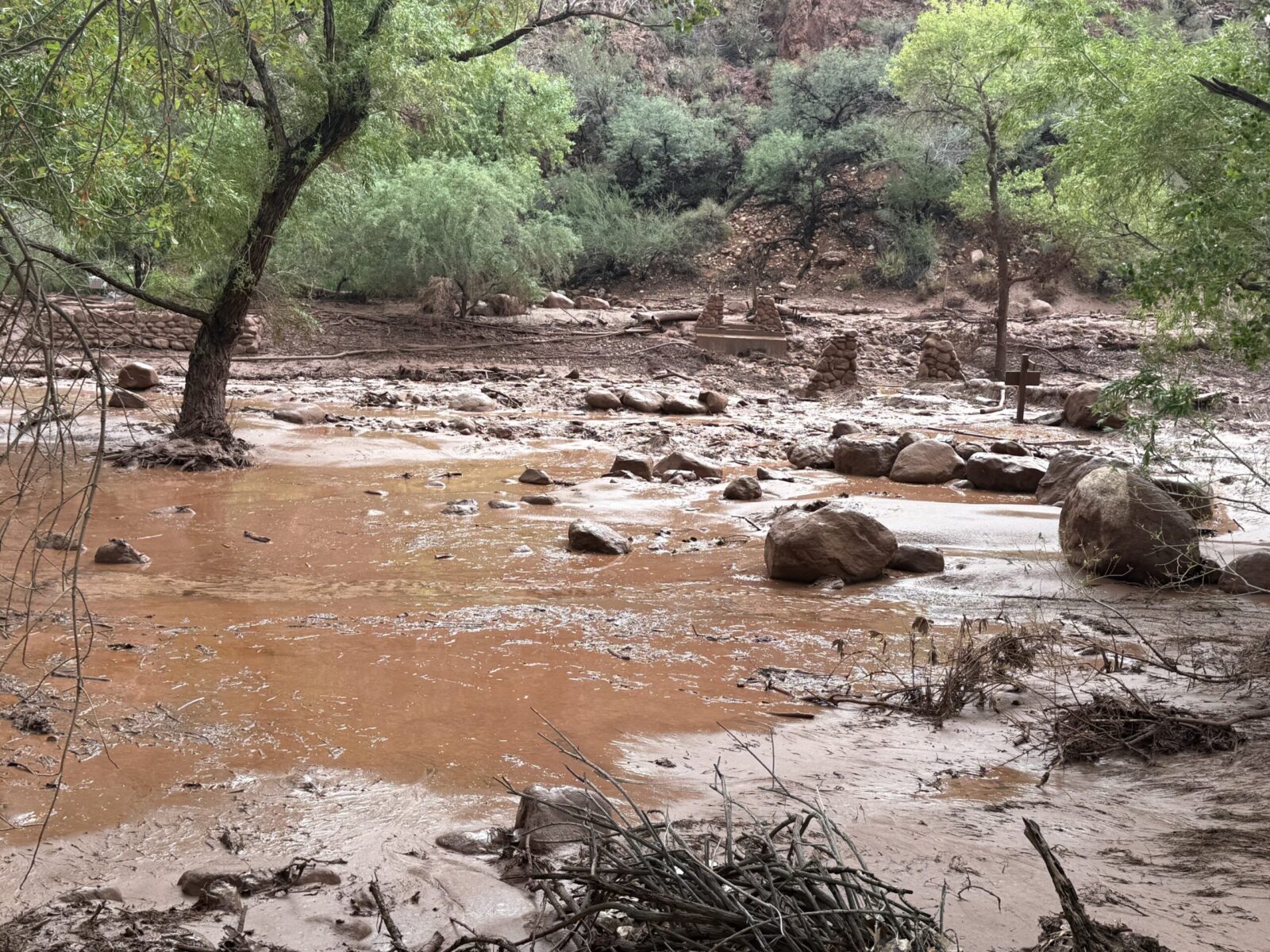
The National Park Service reported that the flash-flood event began at approximately 2:30 p.m. on August 29 in Bright Angel Canyon and around Phantom Ranch. Water and debris moved with enough force to damage facilities and wash away nearly all pedestrian footbridges crossing Bright Angel Creek in the affected corridor. Along the creek, the remains of stone bridge supports stood amid mud, rock, and debris where hikers had crossed before the storm.
Rangers and partner agencies began evacuating visitors from Phantom Ranch, the lower North Kaibab Trail, and Cottonwood Campground. As of the morning of August 30, the NPS reported that 62 people had already been evacuated from Phantom Ranch and the lower trail, with further evacuations planned. The American Red Cross coordinated assistance for evacuees brought to the South Rim.
Phantom Ranch and the trail system
Phantom Ranch, Bright Angel Campground, cabins, the canteen, and the entire North Kaibab Trail were closed in the wake of the flood. The Black Bridge and Silver Bridge over the Colorado River were also closed, while crews evaluated the hazards and condition of nearby routes. On September 3, park officials expanded the temporary restrictions to include portions of the South Kaibab and Bright Angel trails. These decisions affected backpackers and river travelers, but they were essential while responders worked among damaged bridges, unstable slopes, and debris.
The damage reached beyond visible trails. The storm also destroyed vital components of the Bright Angel Creek water intake and affected the legacy Transcanyon Waterline, the system that has long delivered water from the canyon to the South Rim. With water production interrupted, the flood’s consequences reached the rim, dozens of miles from the damaged creek crossings.
How the Dragon Bravo Fire changed the watershed
The North Rim burned extensively during the July 2025 Dragon Bravo Fire, and some of that burned terrain drains toward Bright Angel Creek. When vegetation and surface cover are lost, rainfall can reach the ground with less interception and move downslope more quickly. Severe fire can also alter soil infiltration, while loose ash, rocks, and burned wood can be carried into confined drainage channels. Under intense rainfall, these conditions can increase the risk of rapid runoff and debris flows.
There is an important distinction here. The Dragon Bravo Fire did not burn every part of the watershed equally. The Department of the Interior’s Burned Area Emergency Response assessment documented a predominantly low- and moderate-severity patchwork, with localized higher-severity areas. Its hydrologic modeling identified increased runoff potential in portions of the drainage network and a localized debris-flow hazard in steep, confined channels, including upper Bright Angel Creek.
Those findings help explain why burned terrain required additional caution, but they are not proof that the fire alone caused the August 29 flood. The extraordinary rainfall, canyon topography, existing channel conditions, and post-fire landscape all matter. What is clear is that the canyon faces overlapping hazards, and recovery from one disaster can be interrupted by another.
Repairing a route through the heart of the canyon
By September 8, the National Park Service had outlined a recovery and repair strategy that included a temporary intake at Bright Angel Creek, assessments of damaged trails and utility crossings, and construction work to restore a dependable water supply. Crews were working in difficult terrain, where every repair requires people, tools, and equipment to reach remote locations safely.
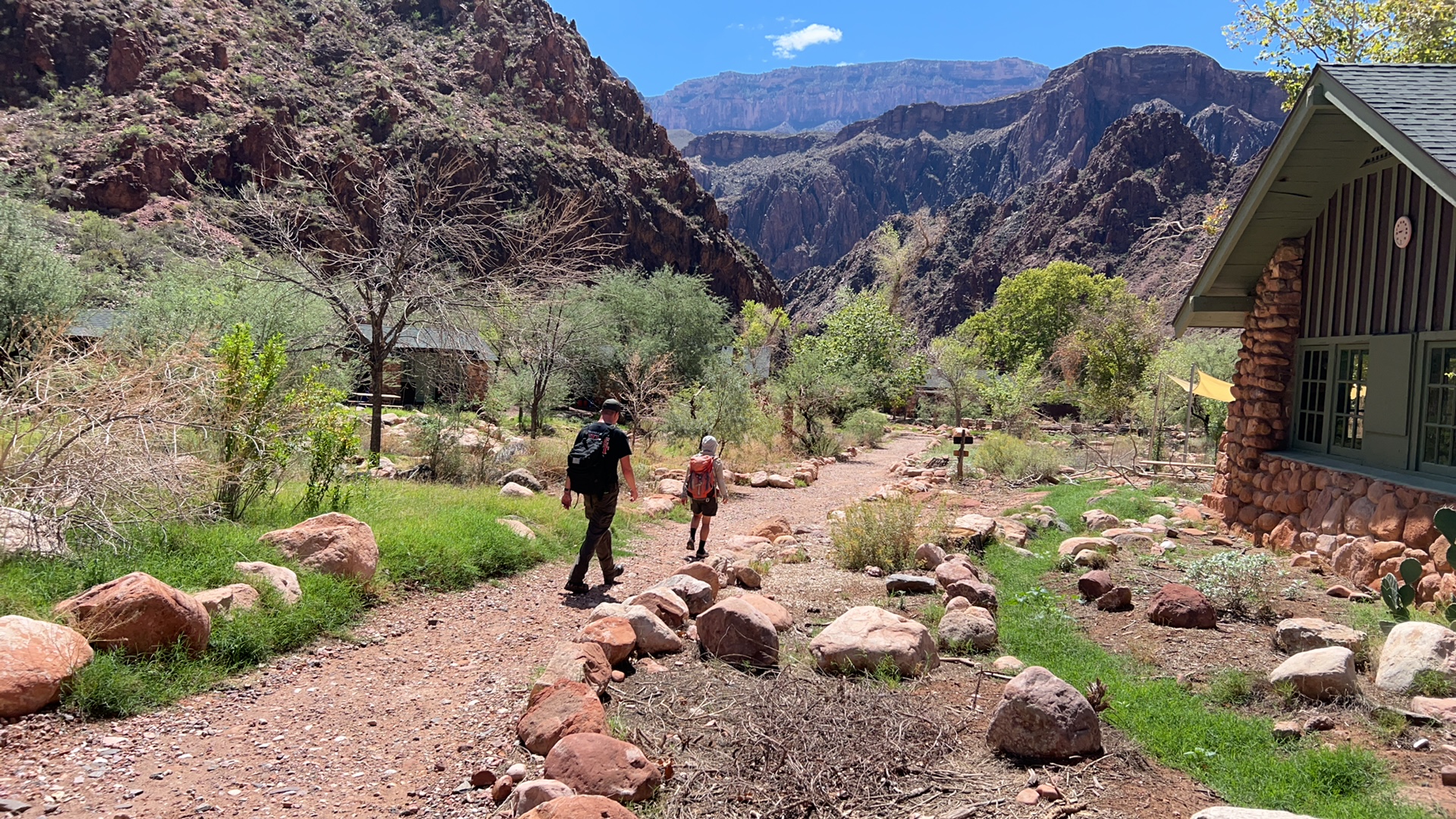
This is not simply a matter of replacing a bridge or repairing a pipe. Bright Angel Canyon is part of the daily working world of trail crews, rangers, utility personnel, mule operations, guides, and hospitality staff. Closures mean disrupted itineraries, canceled stays, and uncertainty for the people whose income depends on safely welcoming others into the canyon.
The people behind the recovery
When we speak about the Grand Canyon, we often think first of its cliffs, trails, and famous viewpoints. But the canyon’s community includes people who serve meals, maintain water systems, guide visitors, clean rooms, protect resources, and respond when emergencies happen. The flooding arrived while many were still rebuilding their lives after the Dragon Bravo Fire. The work of helping those neighbors remains unfinished.
The Grand Canyon relief effort continues to share their story and rally support. You can support the ongoing fundraiser here.

Sources and further reading
NPS: Initial flash-flood report, August 30, 2026; NPS: Expanded closures, September 3; NPS: Recovery and repair plan, September 8; NPS: Dragon Bravo Fire Burned Area Emergency Response assessment.


